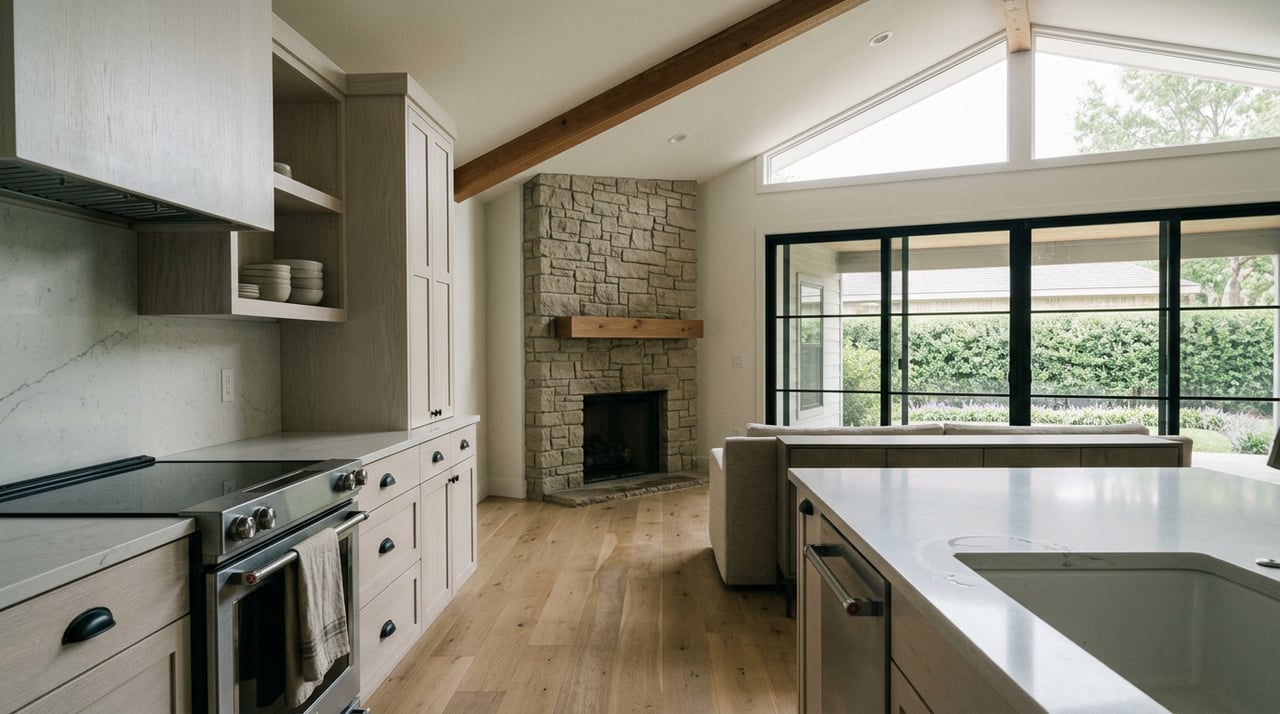
Comparing Villages of Wellington vs. St. Charles in Little Rock
August 27, 2026
August 27, 2026
Type "West Little Rock neighborhood with pool and tennis courts" into a search bar and you will land on two communities that read like the same listing copied twice. Villages of Wellington promises a pool, tennis courts, a park, and a walking trail around a lake. St. Charles, sitting right next door off the same stretch of Chenal Parkway, promises a pool, tennis and pickleball courts, a fishing pond, and jogging trails around its own water feature. Same words, same order, same warm-and-fuzzy tone.
If you are cross-shopping these two neighborhoods from a portal search, the checklist tells you nothing. The two communities are not the same purchase, and the difference that matters most is not the pool or the pickleball court. It is a governance line most buyers never think to ask about until they are already under contract.
Villages of Wellington and St. Charles share more than a zip code's worth of coincidence. Both sit at what locals call the gateway to Chenal Valley, with entrances feeding off Chenal Parkway. St. Charles adds entry points from Napa Valley Drive and Rahling Road. Both communities describe themselves as family-friendly, both lean on the same amenity vocabulary, and both have been marketed for decades as the kind of place where kids ride bikes to the pool.
That overlap is not an accident. These are adjacent subdivisions built to serve the same commuter base heading into the medical corridor and downtown Little Rock, and the developers who built them borrowed from the same playbook: pool, courts, water feature, walking path. If you are comparing them purely on amenities, you will find a tie every time.
The tie breaks the moment you look at what you are actually buying and what you are agreeing to pay for it.
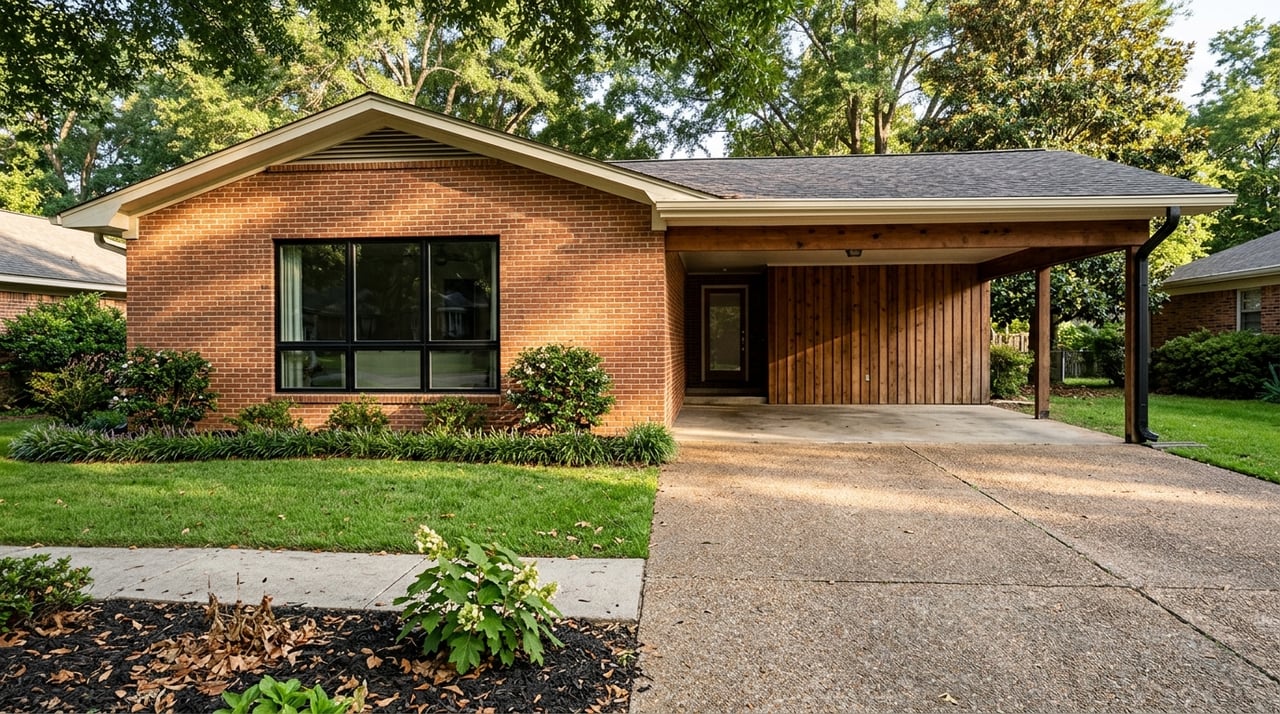
St. Charles was developed in the early 1980s, and it shows in the housing stock. The homes lean traditional brick Colonial and Williamsburg-style, the kind of design vocabulary that was standard for West Little Rock construction more than forty years ago. Villages of Wellington came later. Many of its homes were built after 2000, and the architecture reflects it: more open-concept layouts, a more contemporary feel throughout.
That generational gap shows up in price. Resale listings in St. Charles have historically started in the low $200,000s and topped out above $550,000. Villages of Wellington starts higher, in the high $200,000s, and its ceiling runs past $650,000.
| St. Charles | Villages of Wellington | |
|---|---|---|
| Build era | Early 1980s | Mostly post-2000 |
| Architectural style | Traditional brick Colonial, Williamsburg-influenced | Contemporary, open-concept |
| Typical resale range | Low $200,000s to $550,000+ | High $200,000s to $650,000+ |
| Governance | Community association plus a separate lighting district | Single community association |
That last row is the one worth pausing on.
Buried in the St. Charles Community Association's own list of resident topics, alongside crime watch updates and pool schedules, is a line item labeled Lighting Improvement District. It sits there as its own heading, distinct from the association's other business, because it is its own governance structure. St. Charles maintains a Municipal Lighting Improvement District that installs and maintains neighborhood street lighting and assesses property owners on its own schedule, separate from whatever the community association collects for the pool and courts.
In practical terms, that means a homeowner in St. Charles is not writing one check to one association. They are inside two layered governance structures, each with its own scope and its own bill. Villages of Wellington, based on everything its own community association publishes, runs on a single association model. There is no second district layered underneath the amenities.
This is the kind of detail that never survives a portal comparison. Two neighborhoods can post identical amenity checklists and still ask different things of the people who move in. If you are budgeting for one association fee based on what you saw for a Villages of Wellington listing, then find a comparable-looking home in St. Charles, you need to ask a different set of questions before you assume the numbers translate.
The amenity lists undersell both places, in different directions.
St. Charles residents are close enough to the Annunciation Greek Orthodox Church to make its annual food festival a neighborhood fixture rather than a special trip, and Fellowship Bible Church's fields host the youth sports leagues that fill a lot of family calendars in this part of West Little Rock. Villages of Wellington sits within easy reach of the Adolphine Fletcher Terry branch of the Central Arkansas Library System, and both communities are a short drive from the Trader Joe's and Whole Foods that anchor the retail corridor along Chenal Parkway.
None of that shows up on a pool-and-tennis checklist. It is the texture that actually determines whether a Tuesday evening feels convenient or like a chore, and it applies almost equally to both neighborhoods because they sit close enough together to share it.
Where the two diverge again is school zoning. Portions of both communities feed into the Little Rock School District's Don Roberts Elementary attendance zone, though exact boundaries shift street by street and should be confirmed for any specific address rather than assumed from the neighborhood name alone.
If you are choosing between a St. Charles listing and a Villages of Wellington listing that look similar on price and square footage, the amenity list will not help you decide. These will.
Ask for the current assessment schedule from every governance layer that applies to the property, not just the community association. In St. Charles, that means asking specifically about the lighting district's current charge and how it is billed, separate from association dues.
Ask what the association dues actually fund. A pool and tennis courts sound the same in every brochure, but reserve funding, resurfacing schedules, and who pays for a major repair after a bad storm are questions with real dollar answers.
Ask about the age of major systems relative to the build era. A St. Charles home built in the early 1980s and a Villages of Wellington home built after 2000 are starting from different baselines on roofs, HVAC, and electrical, even before you factor in whatever updates a specific seller has made.
Ask which attendance zone applies to the exact address, not the neighborhood in general, since boundaries can split a subdivision.
None of these questions show up in a listing description. All of them show up in the closing documents, which is exactly why they belong in your search now instead of your inspection period later.
Are Villages of Wellington and St. Charles technically the same neighborhood? No. They are adjacent, separately governed communities with their own associations, though they share access points near Chenal Parkway and sit close enough together to feel like one continuous area from the street.
Does Villages of Wellington have anything similar to the St. Charles lighting district? Based on everything the Villages of Wellington Community Association publishes about its own structure, it operates as a single association covering the pool, tennis courts, park, and lake trail, without a separate lighting district layered on top.
Is St. Charles actually the cheaper option once you factor in the extra assessment? It depends on the specific home and the current assessment amount at the time of purchase. The lower entry price in St. Charles is real, but it is not the full cost picture, which is exactly why it belongs in a direct conversation with the seller's disclosures rather than a portal comparison.
If you are weighing these two neighborhoods, or any other pair of look-alike West Little Rock communities, the fastest way to get past the marketing copy is to walk both with someone who already knows where the differences actually live. Kristen Honea McCready has spent decades reading the fine print on Little Rock neighborhoods that all promise the same pool and the same pickleball court. Reach out to set up a side-by-side tour, or start with an instant home valuation if you are weighing a move from one of these communities into the other.
Work with Kristen for a real estate experience defined by passion, innovation, and results. With the latest tools, market insights, and a client-first approach, she turns your goals into reality.

Keller Williams Realty
Kristen Honea McCready
(501) 960-5353
12814 Cantrell Rd Little Rock AR 72223