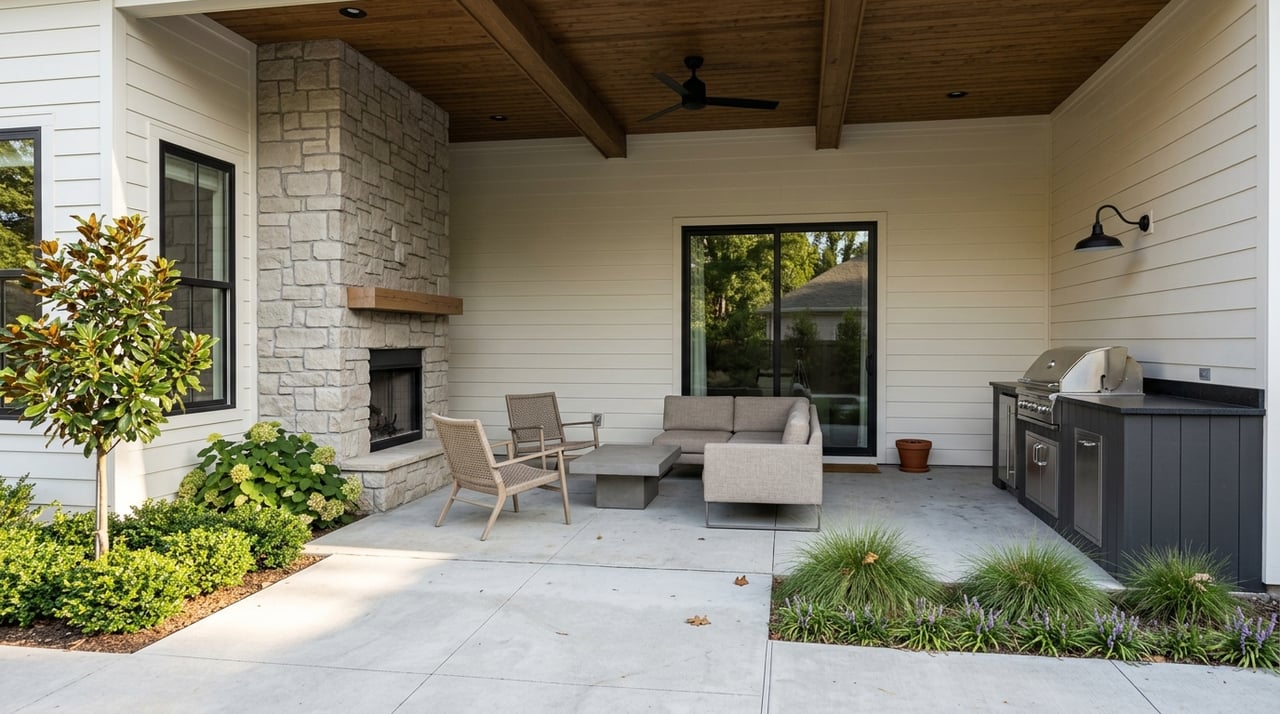
What to Know About Chenal Valley Investment Property
May 28, 2026
May 28, 2026
Thinking about buying a second home or investment property in Chenal Valley? You are not alone. This part of west Little Rock stands out for its lifestyle appeal, strong amenity base, and higher price point, but it also comes with important ownership rules and cost details you need to understand before you buy. If you want a clear look at what makes Chenal Valley attractive, where the risks are, and what to verify before making an offer, this guide will walk you through it. Let’s dive in.
Chenal Valley is not just a single neighborhood. It is a large planned development in west Little Rock with a long history and 38 distinct neighborhoods, according to the Chenal Valley POA. City planning documents describe the broader Chenal district as an area anchored by Chenal Valley and Shinall Mountain, with mostly low-density residential development, commercial nodes, and open-space ridgelines.
That matters if you are buying a second home because the appeal here is more about day-to-day livability than vacation traffic. Chenal offers a suburban lifestyle setting with access to shopping, parks, trails, golf, dining, and medical services, which can make it a practical fit for buyers who want a home they can use regularly and maintain with confidence.
The amenity profile is a big part of the draw. Chenal Country Club includes two championship golf courses, dining, fitness, tennis, a resort-style pool, and year-round activities, while Promenade at Chenal adds a major retail and dining hub nearby. Together, those features support the idea of Chenal Valley as a lifestyle market instead of a simple commuter location.
If you are looking at long-term rental potential, Chenal Valley has some features that support steady interest. The area combines residential neighborhoods with nearby office and commercial development along Chenal Parkway, and the POA notes the addition of CHI St. Vincent’s west campus. That live-work-play setup can help support long-term housing demand.
It is also worth noting that the area is still evolving. City planning references to Chenal Valley Phase 37 show that new residential inventory is still being added. That means you are not buying into a fully static area, and future supply should be part of your planning when you compare resale and rental options.
For market context, Realtor.com described Little Rock as a balanced market in March 2026, with a median days on market of 48 and a citywide median listing price of $274,950. In ZIP code 72223, which includes Chenal Valley addresses, the median listing price was $579,450 and the median rental price was $2,600, placing Chenal in a significantly higher price and rent tier than the city overall.
The biggest difference between Chenal Valley and many other investment areas is that you are often buying into a managed, covenant-driven community. That can help create consistency across the neighborhood, but it also means you need to do more homework than you would in an area with fewer private restrictions.
The Chenal Valley POA manages common areas and amenities and enforces covenants and restrictions. According to the POA FAQ, many properties have two layers of dues: the master Chenal Valley POA and the individual neighborhood POA. Those dues help fund landscaping, streetlights, utilities, and the parks and pools, and they are due whether or not you personally use the amenities.
If you are analyzing a property as a second home or rental, those recurring costs should be part of your math from day one. A home that looks attractive on purchase price alone may be less compelling once you add both levels of dues, insurance, taxes, and ongoing upkeep.
In Chenal Valley, the exact subdivision matters. The POA states that each neighborhood has its own Bill of Assurance, and those private rules can affect how you use the property.
One important point from the POA FAQ is that neighborhood documents prohibit using a residence for business or commercial purposes. The same FAQ also states that exterior changes require approval from the Architectural Control Committee. If you plan to make updates, furnish the home for part-time use, or tailor it to a rental strategy, you need to confirm what is allowed before closing.
This is one of the most important due-diligence steps in Chenal Valley. You should never assume that a plan that works in one subdivision will work in another. Review the governing documents for the specific property so you understand the rules tied to that address.
If your plan involves short-term rentals, city rules come into play in addition to private neighborhood rules. The City of Little Rock says any rental of 30 consecutive days or less requires a short-term rental permit before the property is advertised or rented.
The city’s short-term rental FAQ also says these rentals are subject to a 10% lodging tax and an annual license fee of $200. Each license applies to one dwelling unit, and the city limits owners to a maximum of one whole-home and one partial-home rental.
In practical terms, a short-term rental plan in Chenal Valley needs two green lights. First, the specific subdivision’s covenants need to allow the use. Second, the city’s permitting and tax rules need to be followed. If either piece does not fit, your strategy may need to shift toward personal use or a longer-term rental model.
Taxes are another key part of the ownership picture. Pulaski County says real estate taxes are based on assessed value, with taxes calculated by taking 20% of market value and multiplying that by the local tax rate.
For second-home and investment buyers, the bigger issue is the homestead credit. Pulaski County states that the homestead property tax credit applies only to a homestead, meaning your primary residence, and a taxpayer can claim that credit on only one property. In most cases, that means a second home or investment property in Chenal Valley will not receive the same credit as your primary residence.
That does not mean the property is a poor fit. It just means you need to underwrite the real carrying cost accurately. If you are buying for financial performance, be sure your numbers reflect taxes, dues, insurance, and maintenance without assuming a homestead benefit.
A second home does not have to behave like a vacation rental to make sense. In Chenal Valley, the appeal often comes from convenience, comfort, and access to amenities rather than tourism demand.
The Chenal Valley POA says pools and parks are private facilities for property owners and guests. The City of Little Rock’s Taylor Loop Connection is intended to connect Chenal Valley bike lanes to Pinnacle Valley Drive, Two Rivers Park, the Arkansas River Trail, and downtown Little Rock. Arkansas State Parks also notes that Pinnacle Mountain State Park offers more than 33 miles of trails and more than 19 miles of mountain bike trails.
If you want a lock-and-leave property that still feels connected to outdoor recreation, retail, dining, and west Little Rock services, Chenal Valley can check a lot of boxes. That lifestyle component can also support resale demand over time, especially for homes that are well maintained and aligned with neighborhood standards.
No one can promise future appreciation, and that is especially important to remember in a premium market. Still, the local case for Chenal Valley is based on durability of demand.
The POA states that its role helps maintain property values, and the area’s mix of golf, shopping, parks, trails, medical access, and ongoing development supports a broad buyer pool that values convenience and lifestyle. That does not guarantee a specific return, but it helps explain why well-located, covenant-compliant homes may continue to attract attention from future buyers.
If resale is part of your strategy, focus less on trying to predict quick appreciation and more on buying a property with lasting appeal. Condition, layout, location within the development, and rule compliance can matter just as much as headline market trends.
Chenal Valley can make sense for a few different buyer types. You may be looking for a second home near Little Rock amenities, a long-term rental in a higher-end submarket, or a property that blends personal use with future resale flexibility.
The right fit usually comes down to your priorities. If you are buying mainly for lifestyle, the amenities and setting may carry more weight. If you are buying mainly for income, the dues, tax treatment, and subdivision restrictions deserve extra scrutiny.
Before you move forward on a second home or investment property in Chenal Valley, make sure you verify these basics:
A thoughtful purchase in Chenal Valley starts with local detail. If you want help comparing neighborhoods, reviewing how a specific property fits your goals, or weighing second-home use against investment potential, Kristen Honea Mccready can help you navigate the Little Rock market with clear, personalized guidance.
Work with Kristen for a real estate experience defined by passion, innovation, and results. With the latest tools, market insights, and a client-first approach, she turns your goals into reality.

Keller Williams Realty
Kristen Honea McCready
(501) 960-5353
12814 Cantrell Rd Little Rock AR 72223