What Buyers Should Know About Hillcrest Homes
June 11, 2026
June 11, 2026
Wondering whether Hillcrest is the right fit for your next home? If you are drawn to older homes, in-town convenience, and a neighborhood with real architectural personality, Hillcrest deserves a close look. Before you buy, it helps to understand what makes this part of Little Rock distinct, what kinds of homes you will actually find here, and what day-to-day ownership can involve. Let’s dive in.
Hillcrest is one of Little Rock’s oldest in-town neighborhoods, and that history still shapes the way it looks and feels today. City historic survey materials describe it as a strong example of streetcar-era suburban development and Little Rock’s first suburb. The Hillcrest Historic District was listed on the National Register of Historic Places on November 18, 1990.
That historic identity is not just a label. The district originally counted 1,611 properties, with about 64% identified as contributing structures, and it includes roughly 1,200 houses built between the turn of the century and World War II. For you as a buyer, that means Hillcrest offers a well-established housing stock with a noticeably different character than newer subdivisions.
The setting adds to the appeal. Historic documentation highlights the area’s hills, ravines, mature trees, and fieldstone retaining walls, which help give Hillcrest a layered, established look. If you want a neighborhood with a strong sense of place, this is one reason buyers keep Hillcrest on their short list.
One of the biggest things to know about Hillcrest homes is that the neighborhood is not uniform. You will see a mix of styles, sizes, and exterior details rather than rows of homes that all look the same. That variety can be a major plus if you want a home with personality.
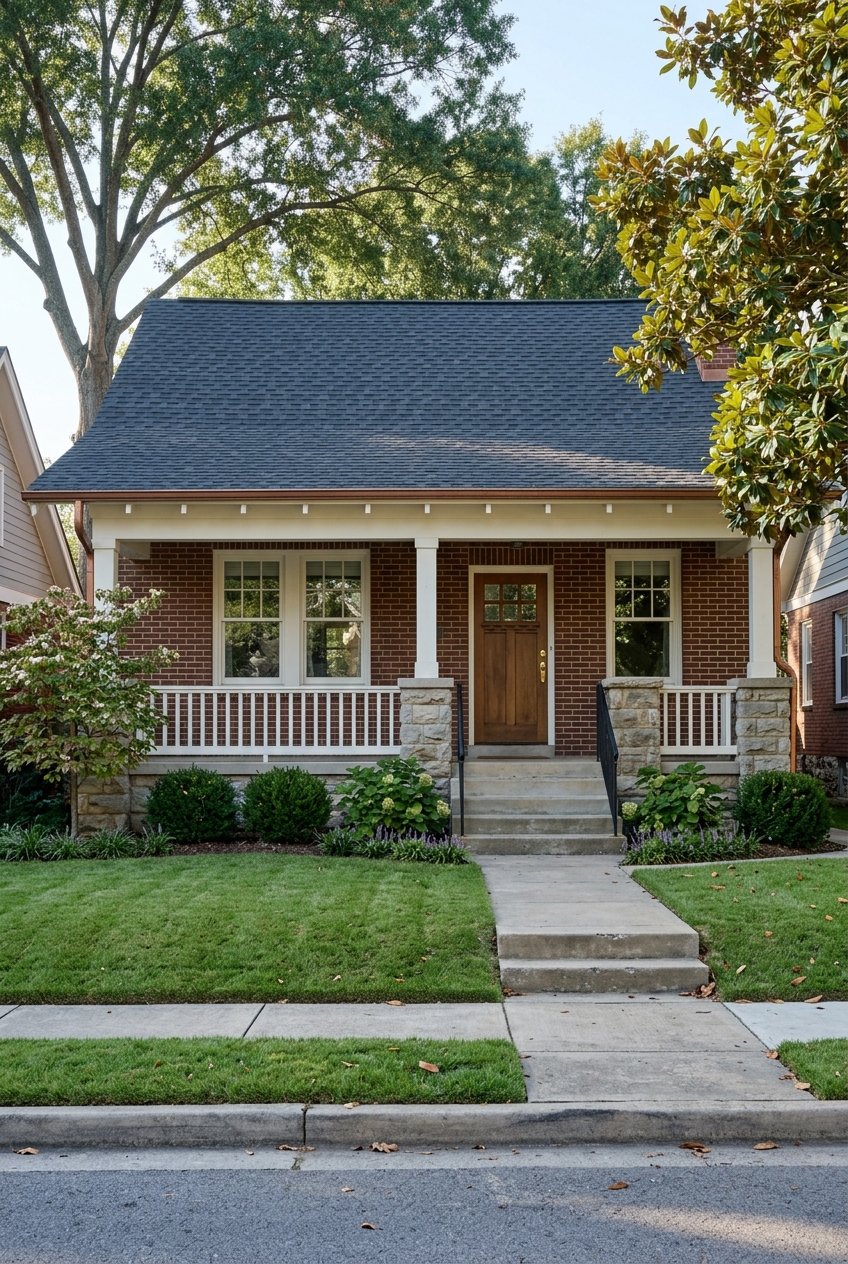
Craftsman bungalows are the most prevalent historic home type in the district. According to the city survey, they make up 38% of the district, or 614 structures. These homes are typically lower to the ground and often feature wide eaves, rustic materials, and front porches that extend living space outdoors.
If you picture Hillcrest as a neighborhood of charming front porches and detailed older homes, Craftsman houses are a big part of that image. They are common enough that many buyers begin their search hoping to find one.
Hillcrest also includes American Foursquare homes, Colonial Revival houses, pyramid-roof cottages, and examples of Queen Anne, Prairie, Tudor Revival, and English Revival architecture. The city’s National Register summary identifies English Revival, Colonial Revival, and Craftsman as predominant styles, while SAH Archipedia notes Tudor Revival as the second most predominant style after Craftsman.
That mix matters because it gives you more than one version of “historic charm.” Some homes feel modest and compact, while others are larger and more formal. The city survey also notes that homes range from grand-scale to medium-scale to modest-scale versions of similar plans.
Part of Hillcrest’s appeal is in the details. Many properties combine brick, stone, stucco, half-timbering, and fieldstone accents. When you tour homes here, you may notice that exterior materials and design features often play a big role in how each property stands apart.
Hillcrest homes are often older, but that does not mean they all fall into one size range. Recent neighborhood data puts the median year built at 1935, the average single-family home size at 1,660 square feet, and the median lot size at 6,969 square feet, or about 0.16 acre.
That gives you a helpful baseline, but it is still just a baseline. Recent sales and active listings have included smaller homes and condos around 977 to 1,428 square feet, mid-sized homes around 1,800 to 2,300 square feet, and occasional larger renovated properties around 4,145 square feet. Some larger corner-lot and estate-scale properties are also part of the neighborhood’s mix.
For buyers, the takeaway is simple: Hillcrest offers options, but lot sizes and floor plans often reflect the neighborhood’s historic roots. If you want a large new-construction footprint or a standardized layout, Hillcrest may feel less predictable. If you value charm, variety, and established streetscapes, that tradeoff may be exactly what you want.
If you are shopping Hillcrest now, expect a neighborhood with a steady stream of listings but not just one product type. Current portal data shows roughly 60 to 65 homes for sale. Realtor.com reports a median listing price of $332,000 with 61 homes for sale, while Homes.com reports an average value of about $309,488 and 64 homes for sale.
Inventory is also broader than some buyers expect. In addition to detached single-family homes, current listings may include condos, townhomes, a few multifamily properties, and some lots or land. That range can open up possibilities depending on your budget, lifestyle, and long-term plans.
Hillcrest often appeals to buyers who want to stay close to the center of Little Rock. Homes.com notes that downtown is less than 3 miles away, and UAMS Medical Center is in the neighborhood. That kind of location can make Hillcrest especially attractive if you want shorter drives and easier access to city amenities.
Kavanaugh Boulevard is another part of the draw. Neighborhood data points to local shops, restaurants, coffee spots, and a year-round Saturday farmers market nearby. Apartments.com rates Hillcrest as moderately walkable and very drivable, which helps set practical expectations for how you may get around.
Outdoor access is part of the picture too. The city’s Allsopp Trail project connects the Hillcrest Business District to Allsopp Park and the Arkansas River Trail by concrete trail. For buyers who value nearby green space and better pedestrian and bicycle connections, that can be a meaningful benefit.
Historic appeal comes with important context. The city’s Hillcrest Design Overlay District is intended to maintain compatible building scale, parking, landscaping, streetscapes, and street furnishings. It also aims to discourage out-of-scale additions, remodeling, and teardowns.
For you, that means buying in Hillcrest is not only about the house itself. It is also about the surrounding neighborhood pattern and the standards that help preserve its character. If you love historic architecture and want a more cohesive streetscape, that can be a strong advantage.
If your goal is to make major exterior changes quickly or create something that feels dramatically different from the surrounding homes, you should understand those expectations early. Buyers who do best in Hillcrest usually appreciate the balance between personal ownership and neighborhood continuity.
Because Hillcrest has so much variety, it helps to approach your search with a clear plan. Two homes at a similar price point can offer very different layouts, lot sizes, updates, and long-term maintenance needs. Looking beyond the listing photos is especially important here.
Older homes can make a great first impression, but you also want to think through everyday function. Consider how the floor plan works for your lifestyle, whether storage is adequate, and how much outdoor space you really want. Historic character is valuable, but so is a house that fits the way you live.
In a neighborhood where many homes were built before World War II, renovations can vary a lot from one property to the next. Some homes may have extensive updates, while others retain more original features. As you compare options, pay attention to how improvements affect comfort, upkeep, and value.
A condo, bungalow, larger Colonial Revival home, and corner-lot property can all exist within the same neighborhood search. That means your budget may stretch differently depending on the type of property you choose. It also means your day-to-day responsibilities may look very different from one listing to another.
Hillcrest tends to work best for buyers who want an in-town location, mature trees, established streets, and homes with distinct architecture. It can be a strong match if you enjoy neighborhood-scale retail, outdoor access, and the character that comes with older housing stock. Buyers looking for historic homes often appreciate that Hillcrest offers both charm and variety.
It may be less ideal if your top priorities are very large lots, highly standardized floor plans, or a new-subdivision feel. The neighborhood’s appeal comes from its individuality, not from sameness. Knowing that upfront can help you search with confidence and avoid wasting time on areas that fit your goals better.
When you are comparing homes in Hillcrest, local neighborhood knowledge matters. Working with an agent who understands Little Rock’s established neighborhoods can help you spot the differences that do not always show up in an online search. If you are thinking about buying in Hillcrest, connect with Kristen Honea Mccready for thoughtful, neighborhood-rooted guidance.
Work with Kristen for a real estate experience defined by passion, innovation, and results. With the latest tools, market insights, and a client-first approach, she turns your goals into reality.
Keller Williams Realty
Kristen Honea McCready
(501) 960-5353
12814 Cantrell Rd Little Rock AR 72223